
Lesson · How to pray
Salah, taught one movement at a time.
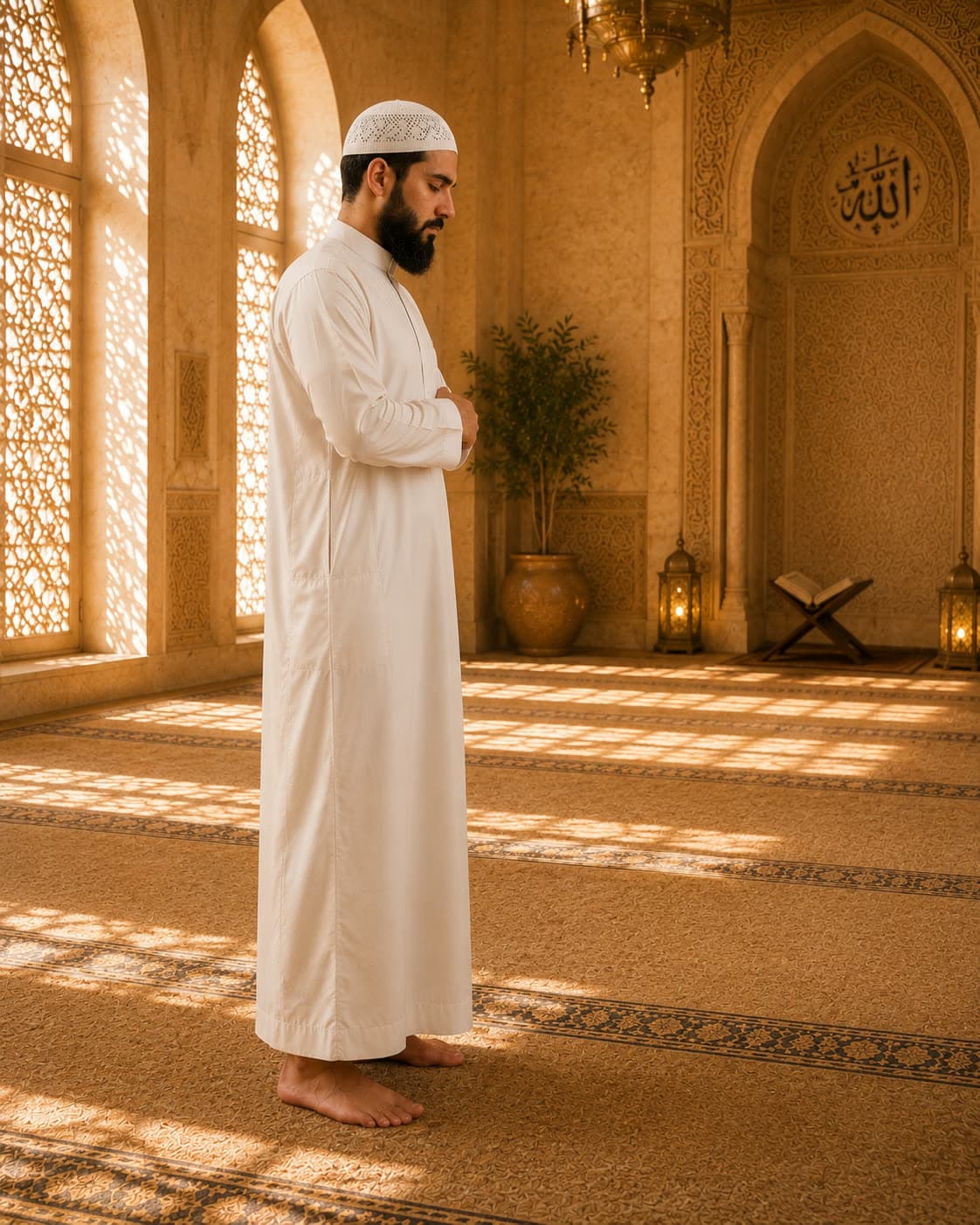
What salah is
Salah is the second pillar of Islam after the shahadah. It is a private, daily, structured conversation with Allah — five times every day, at five marked times.
Each prayer is made of rakahs — units of standing, bowing, prostrating, and sitting. Once you learn one rakah, you know them all. The rest is just repetition.
Why salah
Salah anchors the day around remembrance of Allah. It is the first thing a Muslim is asked about on the Day of Judgement.
The Prophet ﷺ said: between a person and disbelief is the abandoning of prayer. Hold on to it gently — start with what you can manage and build.
إِنَّ الصَّلَاةَ تَنْهَىٰ عَنِ الْفَحْشَاءِ وَالْمُنْكَرِ
“Indeed, prayer prohibits immorality and wrongdoing.”
Al-ʿAnkabūt 29:45
The five prayers
Fajr — before sunrise. 2 rakahs.
Dhuhr — early afternoon, after the sun has passed its zenith. 4 rakahs.
Asr — late afternoon, before sunset. 4 rakahs.
Maghrib — just after sunset. 3 rakahs.
Isha — after twilight, before midnight. 4 rakahs.
Use a prayer-time app (e.g. Muslim Pro, Athan) for accurate times in your city.
Before you begin
You need: wudu, clean clothes, a clean place, and to face the Qibla (the direction of the Kaaba in Makkah). Most prayer apps have a compass.
Stand with your feet shoulder-width apart, hands at your sides, facing Qibla. Quiet the heart. You are about to stand before Allah.
The steps
11 steps, one at a time.
- 01
Niyyah — make the intention
Quietly intend in your heart: I am praying [Fajr / Dhuhr / Asr / Maghrib / Isha] for the sake of Allah.
No need to say it aloud.
- 02
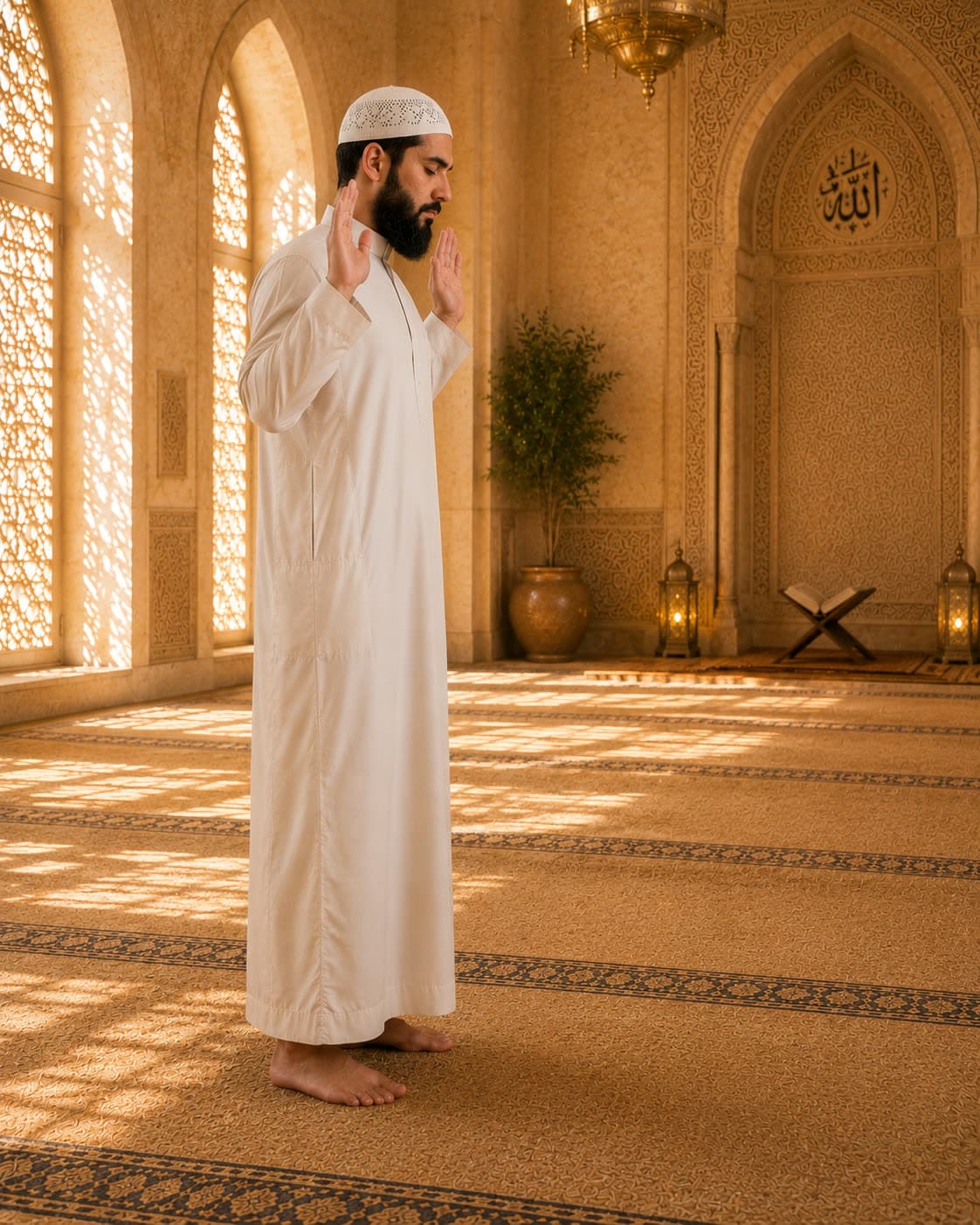
Takbir — open the prayer
اللَّهُ أَكْبَرُ
Allāhu Akbar
“Allah is the Greatest.”
Raise both hands to your ears (or shoulders), say the takbir, then place your right hand over your left on the chest or just below.
From this moment you are in salah. The world outside is not your business until you finish.
Takbir — open the prayer - 03
Recite Al-Fatihah, standing
بِسْمِ اللَّهِ الرَّحْمَٰنِ الرَّحِيمِ الْحَمْدُ لِلَّهِ رَبِّ الْعَالَمِينَ الرَّحْمَٰنِ الرَّحِيمِ مَالِكِ يَوْمِ الدِّينِ إِيَّاكَ نَعْبُدُ وَإِيَّاكَ نَسْتَعِينُ اهْدِنَا الصِّرَاطَ الْمُسْتَقِيمَ صِرَاطَ الَّذِينَ أَنْعَمْتَ عَلَيْهِمْ غَيْرِ الْمَغْضُوبِ عَلَيْهِمْ وَلَا الضَّالِّينَ
Bismillāhi r-Raḥmāni r-Raḥīm. Al-ḥamdu lillāhi rabbi l-ʿālamīn. Ar-Raḥmāni r-Raḥīm. Māliki yawmi d-dīn. Iyyāka naʿbudu wa-iyyāka nastaʿīn. Ihdinā ṣ-ṣirāṭa l-mustaqīm. Ṣirāṭa lladhīna anʿamta ʿalayhim ghayri l-maghḍūbi ʿalayhim wa-lā ḍ-ḍāllīn.
“In the name of Allah, the Most Gracious, the Most Merciful. All praise is for Allah, Lord of all worlds. The Most Gracious, the Most Merciful. Master of the Day of Judgement. You alone we worship; You alone we ask for help. Guide us along the Straight Path — the path of those You have blessed, not of those who incur wrath, nor of those who are astray.”
Al-Fatihah is recited in every rakah, in every prayer, by every Muslim. Seven verses. Memorise it slowly — it is enough on its own.
Quietly say 'Āmīn' at the end.
Recite Al-Fatihah, standing - 04
Recite a short surah (first two rakahs only)
After Al-Fatihah, recite a short passage of Qur'an. Surah Al-Ikhlas (chapter 112) is just four verses and a complete summary of belief — start there.
From the third rakah onward, only Al-Fatihah is recited, no second surah.
- 05
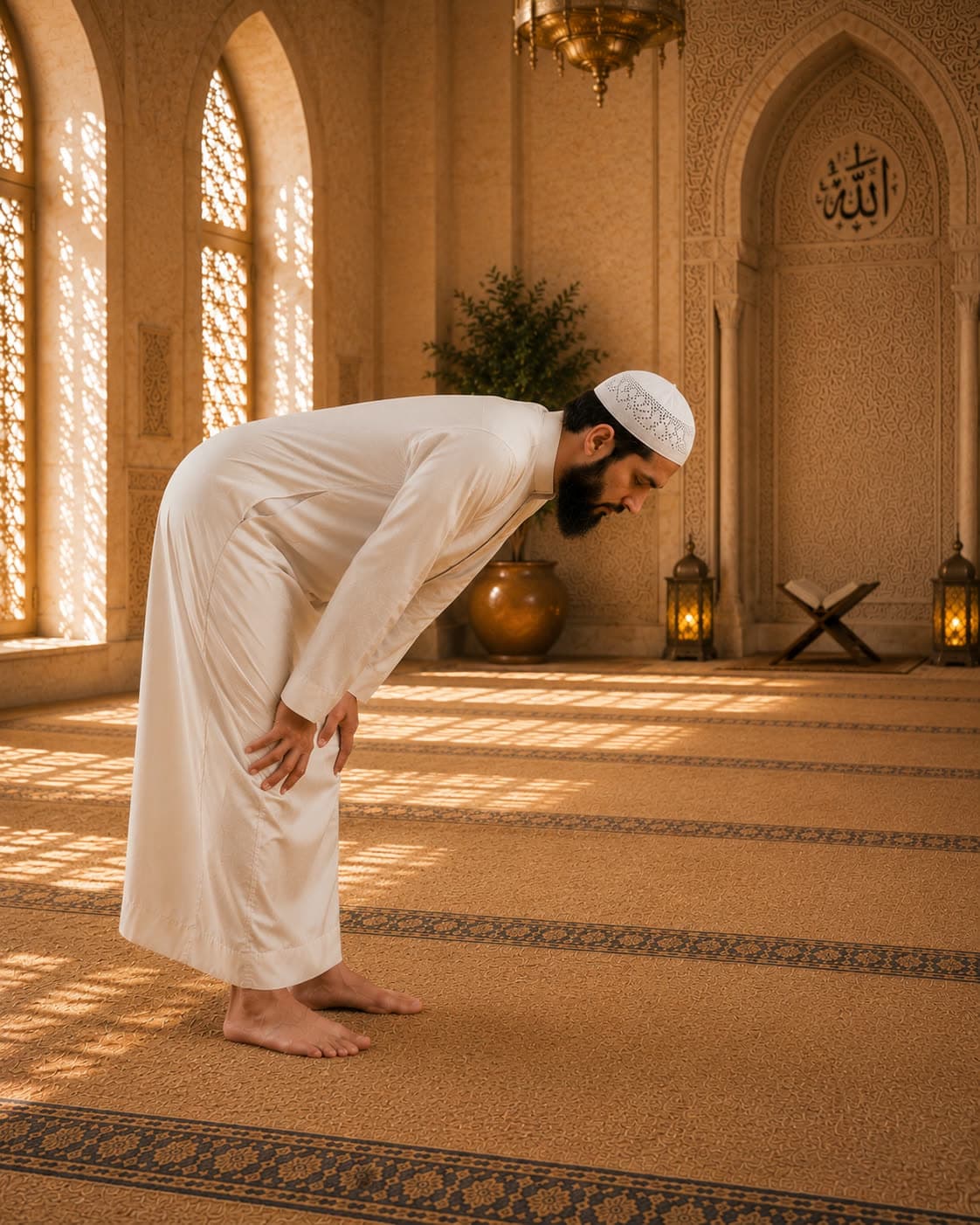
Ruku — bow
سُبْحَانَ رَبِّيَ الْعَظِيمِ
Subḥāna rabbiya l-ʿaẓīm
“Glory is to my Lord, the Most Great.”
Say Allāhu Akbar, then bow with a flat back and hands on your knees. Eyes look at the ground in front of you.
Recite the dhikr above three times.
Ruku — bow - 06
Rise from ruku
سَمِعَ اللَّهُ لِمَنْ حَمِدَهُ. رَبَّنَا وَلَكَ الْحَمْدُ
Samiʿa-Allāhu liman ḥamidah. Rabbanā wa-laka l-ḥamd.
“Allah hears whoever praises Him. Our Lord, all praise is for You.”
Stand up straight from ruku. Say the first phrase as you rise; the second once you are standing.
- 07
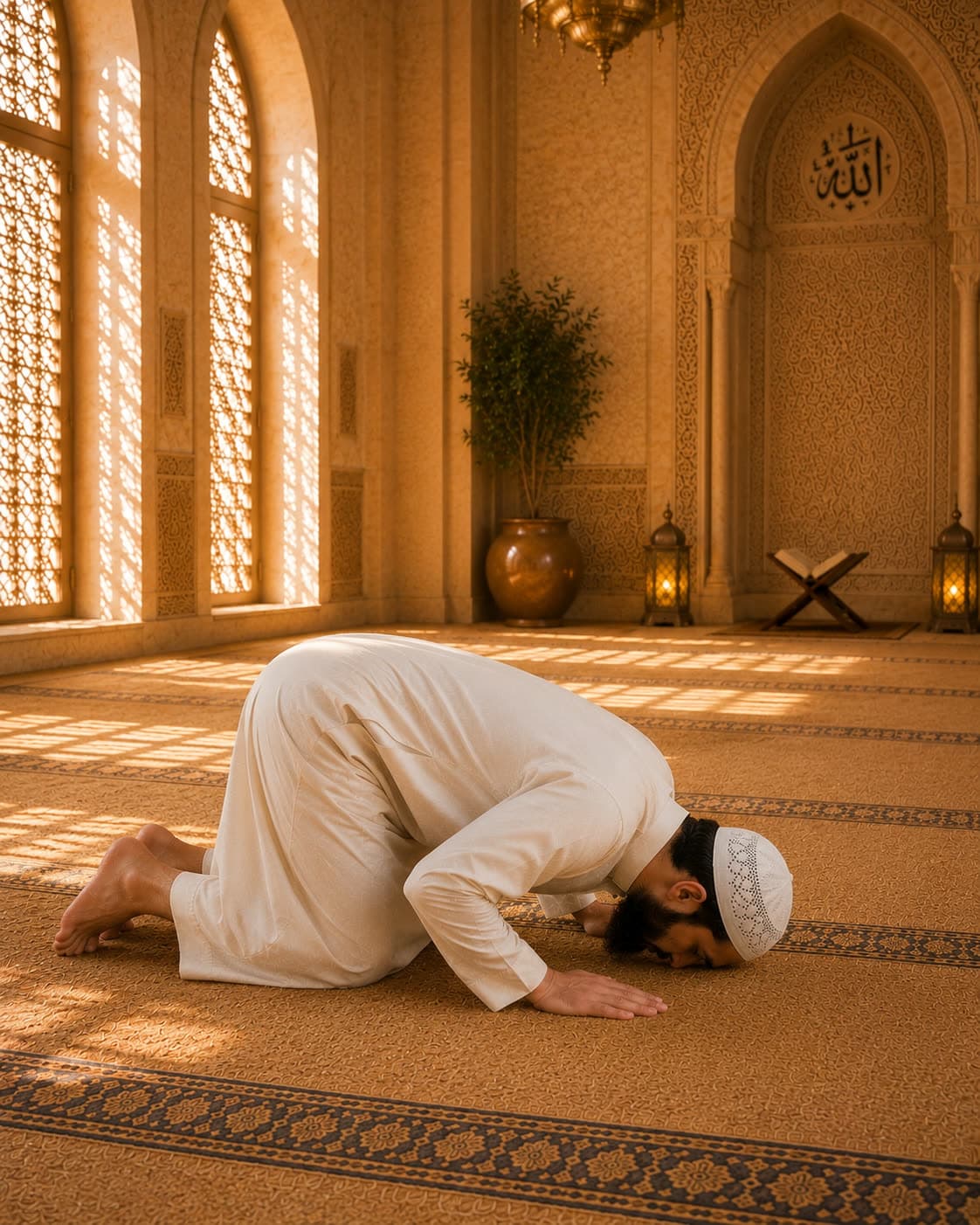
Sujud — prostrate
سُبْحَانَ رَبِّيَ الْأَعْلَى
Subḥāna rabbiya l-aʿlā
“Glory is to my Lord, the Most High.”
Say Allāhu Akbar, then go down to sujud — forehead, nose, both palms, both knees, and the tips of both feet on the ground. Seven points.
This is the closest you ever are to Allah. Recite the dhikr above three times. Make a quiet dua of your own.
Sit briefly, then prostrate again. That is two sujuds — the second half of one rakah.
Sujud — prostrate - 08
Stand for the next rakah, or sit for tashahhud
After the second sujud, stand up for the next rakah and start again from Al-Fatihah.
After the second rakah, sit (do not stand) and recite the tashahhud below.
After the final rakah, sit again and complete with salawat and salam.
- 09
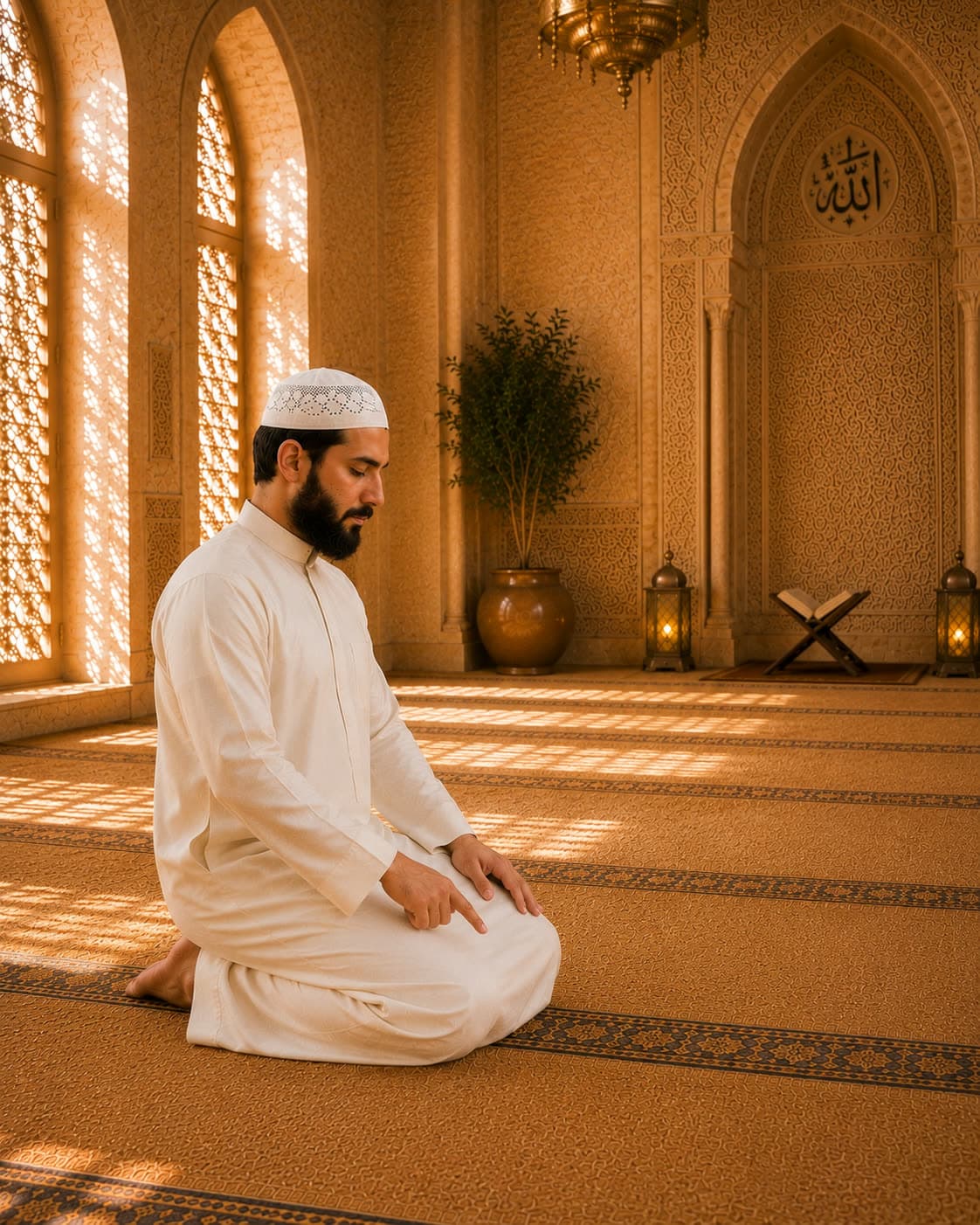
Tashahhud, sitting
التَّحِيَّاتُ لِلَّهِ، وَالصَّلَوَاتُ، وَالطَّيِّبَاتُ. السَّلَامُ عَلَيْكَ أَيُّهَا النَّبِيُّ وَرَحْمَةُ اللَّهِ وَبَرَكَاتُهُ. السَّلَامُ عَلَيْنَا وَعَلَى عِبَادِ اللَّهِ الصَّالِحِينَ. أَشْهَدُ أَنْ لَا إِلَٰهَ إِلَّا اللَّهُ، وَأَشْهَدُ أَنَّ مُحَمَّدًا عَبْدُهُ وَرَسُولُهُ
At-taḥiyyātu lillāh, wa-ṣ-ṣalawātu wa-ṭ-ṭayyibāt. As-salāmu ʿalayka ayyuhā n-nabiyyu wa-raḥmatu llāhi wa-barakātuh. As-salāmu ʿalaynā wa-ʿalā ʿibādi llāhi ṣ-ṣāliḥīn. Ashhadu an lā ilāha illā-Allāh, wa-ashhadu anna Muḥammadan ʿabduhu wa-rasūluh.
“All greetings, prayers, and pure words are for Allah. Peace be upon you, Prophet, and Allah's mercy and blessings. Peace be upon us and upon the righteous servants of Allah. I bear witness that there is no god but Allah, and I bear witness that Muhammad is His servant and messenger.”
Raise your right index finger when you say 'I bear witness…'.
Tashahhud, sitting - 10
Salawat (final sitting only)
اللَّهُمَّ صَلِّ عَلَى مُحَمَّدٍ وَعَلَى آلِ مُحَمَّدٍ، كَمَا صَلَّيْتَ عَلَى إِبْرَاهِيمَ وَعَلَى آلِ إِبْرَاهِيمَ، إِنَّكَ حَمِيدٌ مَجِيدٌ. اللَّهُمَّ بَارِكْ عَلَى مُحَمَّدٍ وَعَلَى آلِ مُحَمَّدٍ، كَمَا بَارَكْتَ عَلَى إِبْرَاهِيمَ وَعَلَى آلِ إِبْرَاهِيمَ، إِنَّكَ حَمِيدٌ مَجِيدٌ
Allāhumma ṣalli ʿalā Muḥammad wa-ʿalā āli Muḥammad, kamā ṣallayta ʿalā Ibrāhīm wa-ʿalā āli Ibrāhīm, innaka Ḥamīdun Majīd. Allāhumma bārik ʿalā Muḥammad wa-ʿalā āli Muḥammad, kamā bārakta ʿalā Ibrāhīm wa-ʿalā āli Ibrāhīm, innaka Ḥamīdun Majīd.
“O Allah, send blessings upon Muhammad and his family as You sent blessings upon Ibrahim and his family. You are indeed Praiseworthy and Glorious. O Allah, bless Muhammad and his family as You blessed Ibrahim and his family. You are indeed Praiseworthy and Glorious.”
Recite this only at the end of the prayer, in the final sitting before salam.
- 11
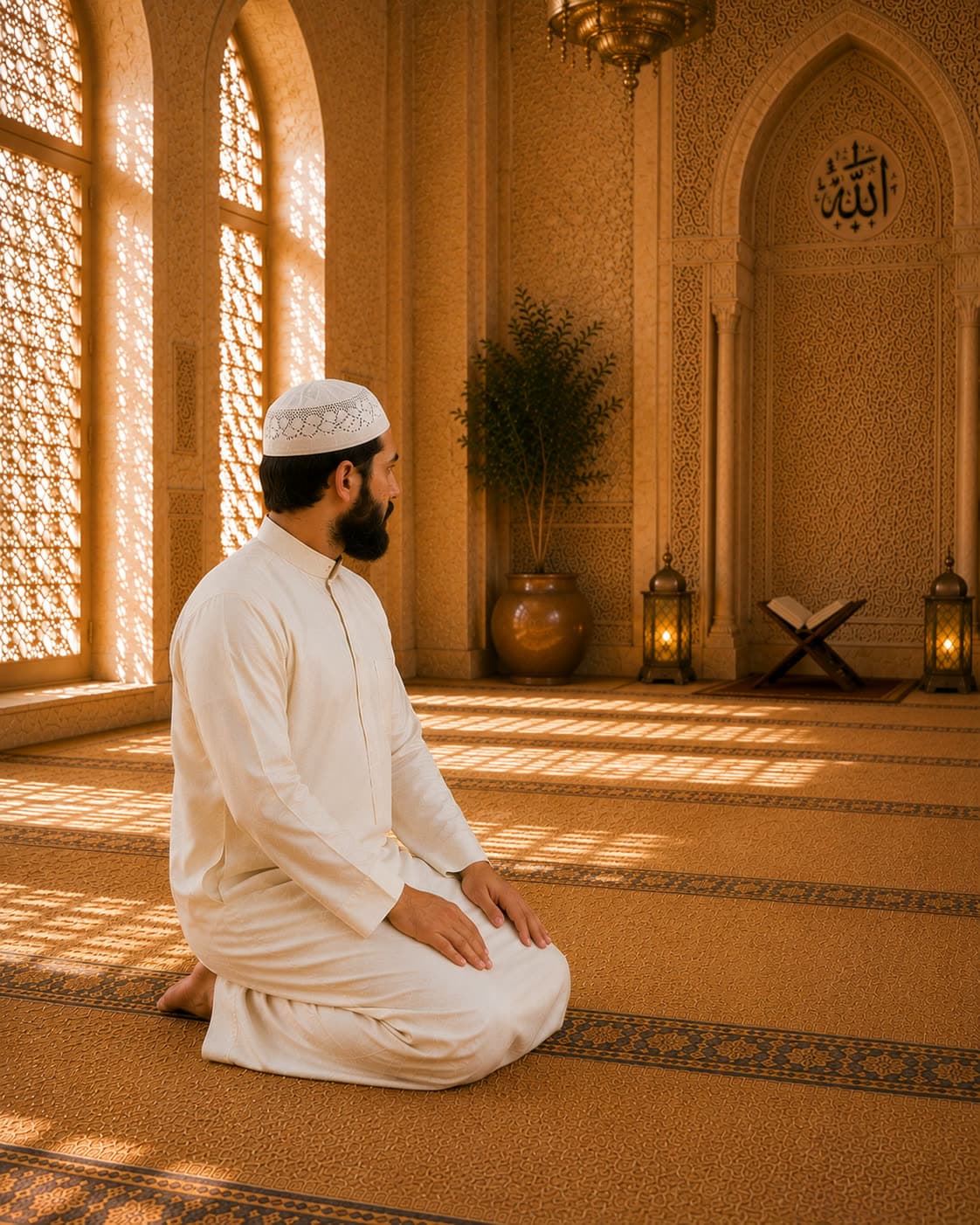
Salam — close the prayer
السَّلَامُ عَلَيْكُمْ وَرَحْمَةُ اللَّهِ
As-salāmu ʿalaykum wa-raḥmatu llāh
“Peace and the mercy of Allah be upon you.”
Turn your head right, say the salam. Turn your head left, say it again.
You have prayed. You can now make any personal du'a in your own language.
Salam — close the prayer
Just so you know
Building your prayer slowly
If five prayers a day feel impossible right now, start with one — Maghrib, after sunset, is short and easy to keep.
Then add Fajr. Then the others. The Prophet ﷺ taught the prayer to new Muslims gradually. There is no shame in beginning small. The shame is in giving up entirely.
After every salah
Stay for a minute. Recite SubhanAllah 33 times, Alhamdulillah 33 times, Allahu Akbar 34 times. Then Ayat al-Kursi (verse 2:255). Then make personal du'a.
This little post-prayer routine is the secret of consistency.